

Zero Company and Galactic Racer look nothing alike. That may be the point. Star Wars games stay fresh by letting genre rewrite the galaxy.
In 2026, Star Wars gaming looks like two different hobbies depending on which box you open. Star Wars Zero Company turns the Clone Wars into a turn-based tactics problem about positioning, action points, extraction routes and squad builds. A few weeks later, Star Wars: Galactic Racer asks players to forget cover percentages entirely and worry about speed, rivalries, vehicle classes and surviving another run through the Outer Rim. One franchise, two games, almost no mechanical DNA in common.
Four decades of Star Wars games suggest that gap is the point rather than a problem. The best of them rarely succeed by finding one perfect Star Wars formula. They succeed by allowing a strong game genre to reinterpret the galaxy.
2026 Makes the Pattern Impossible to Miss
The current lineup is unusually clear evidence. Zero Company does not bolt lightsabers onto a generic action game. Its identity comes from tactics, meaning limited actions, specialised operatives, changing objectives and a squad that matters because every move has consequences. Its focus on a war beneath the war makes the Clone Wars feel less like a montage of heroic battles and more like dangerous operations where getting everyone home matters more than clearing the map.
Galactic Racer takes the opposite route. Its roguelite racing structure is built around repetition, risk and mastery, with multiple classes of repulsorcraft, a story campaign, competitive multiplayer and a progression ladder running through the Galactic League. Star Wars becomes motorsport culture, which is a much narrower fantasy than being a hero in the Star Wars universe. That narrowness is exactly why it has a chance to feel distinctive.
Put those games next to each other and the larger history comes into focus. Star Wars games are often most convincing when the genre decides which parts of the galaxy matter.
Outlaws and SWTOR Prove That Scale Is Not the Point
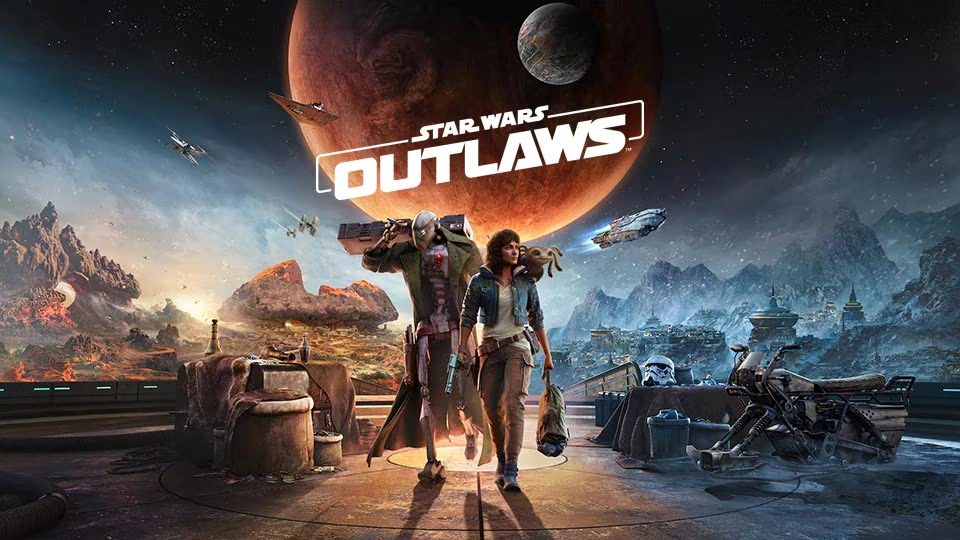
Star Wars Outlaws was sold as the franchise’s first open-world game, but the important part was never the size of the map. Open-world design changed the type of Star Wars story the game could tell. Kay Vess does not move through the galaxy like a Jedi following a destiny. She navigates opportunities, reputations, criminal syndicates and bad odds. The scoundrel fantasy makes the spaces between major events important.
That is why Outlaws works best when it is a game about being somewhere rather than a game about recreating a film. A speeder journey across Toshara, deciding which syndicate to annoy, or slipping into a restricted area does more for the fantasy than another framed reference to the original trilogy.
SWTOR attacks the same problem from the opposite direction. An MMO needs the galaxy to be somewhere players can live for years, which means classes, social spaces, repeatable activities and the strange accumulation of systems that only long-running online games develop. More than a decade after launch, SWTOR is still receiving live updates. The galaxy can support a routine as well as a story.
KOTOR and Empire at War Changed What Star Wars Meant
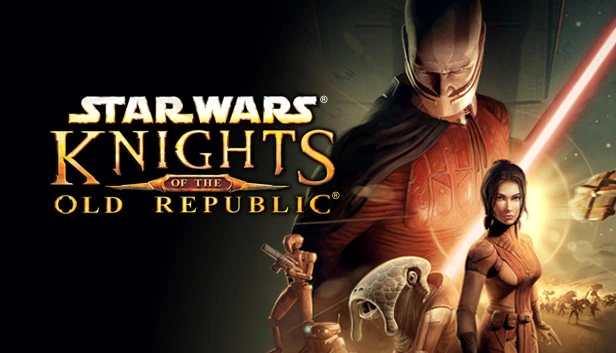
Knights of the Old Republic is remembered for its characters and its twist, but its deeper achievement was letting the RPG form reshape Star Wars. Dialogue choices, party composition, morality systems and character progression slowed the galaxy down. Instead of watching someone discover who they were, players spent hours constructing that identity themselves.
That sounds obvious now because KOTOR became so influential, but it was a real shift. Star Wars did not need to be fast to feel authentic. It could be conversational. It could stop for inventory screens, moral choices and arguments with companions on the Ebon Hawk.
Empire at War performed a similar trick at a completely different scale. Strategy games care less about the individual hero and more about production, territory, fleets and the relationship between battles. Star Wars stopped being Luke flying into danger and became the machinery behind him, built from planets, resources, commanders and military decisions. The genre turned background texture into the main event.
The wider history of Star Wars games is full of these transformations. The franchise has been a platformer, a shooter, an RPG, an MMO, a real-time strategy game, a racer, a tactics game and a flight sim.
Dark Forces and X-Wing Understood the Trick Early
Dark Forces did not become memorable by being Doom with stormtroopers. The first-person format made Star Wars physical in a new way. Corridors had height. Imperial facilities became spaces to navigate rather than sets to look at. Weapons had weight because the player had to use them rather than admire the choreography.
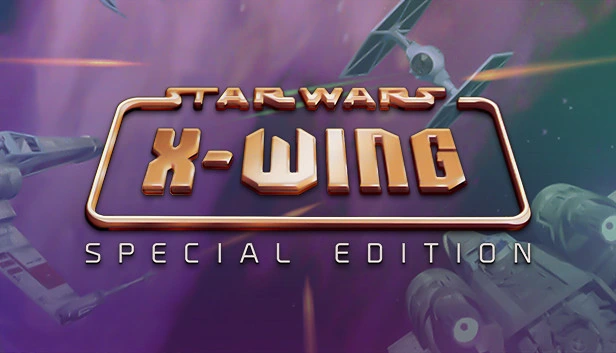
X-Wing demonstrated the principle even more cleanly. It did not ask whether a computer could reproduce the trench run shot for shot. It asked what it would feel like to have a job inside a Rebel cockpit. The answer involved shields, power management, target identification and mission objectives, and the discovery that the work is harder when nobody edits out the dull parts.
Films can tell us that Rebel pilots are brave. A simulation can make us discover why.
Where the Theory Strains
The honest version of this argument has to account for the failures, and there are plenty. For every X-Wing there is a licensed tie-in that picked a genre and brought nothing to it. Letting genre lead is not a guarantee of anything, and the games listed here are the survivors, which makes any pattern drawn from them flattering by construction.
The EA exclusivity era is the sharper test. It narrowed the range to shooters and action games for years, and the current spread of tactics, racing and open world only exists because the licence was opened up again. The lesson may be less about genre as a creative principle and more about how many studios are allowed near the galaxy at once.
Genre Is the Translation Layer
Licensed games often get nervous about straying too far from the source. If you paid for Star Wars, you want the audience to recognise Star Wars. The danger is that recognition becomes the whole design brief, leaving familiar characters, music and camera angles with little reason for the experience to exist as a game.
The strongest Star Wars titles trust the opposite approach. They start with a clear genre fantasy and ask which part of the galaxy becomes interesting under those rules. RPGs find moral ambiguity and companionship. Strategy games find logistics and command. MMOs find ordinary life between heroic moments. Flight sims find the cockpit.
That is why the franchise can keep returning without every new game feeling like a remake of the last one. There is no single correct way to turn Star Wars into a video game, because the galaxy is large enough to survive being translated repeatedly.
GamerHeadlines Takeaway
Zero Company and Galactic Racer look like strange neighbours until you see them as part of the same tradition. Star Wars gaming has been healthiest when developers let genre reshape the licence instead of forcing every genre into the same cinematic mould.
That is the through-line from X-Wing to KOTOR, Empire at War, SWTOR, Outlaws and the 2026 releases. The galaxy stays familiar, but the verbs keep changing. In games, the verbs are usually where the identity lives.
About the author. Søren Ahrensborg Kamper has written about Star Wars games, their history and the communities around them since 2009. He is the editor of Star Wars: Gaming.


