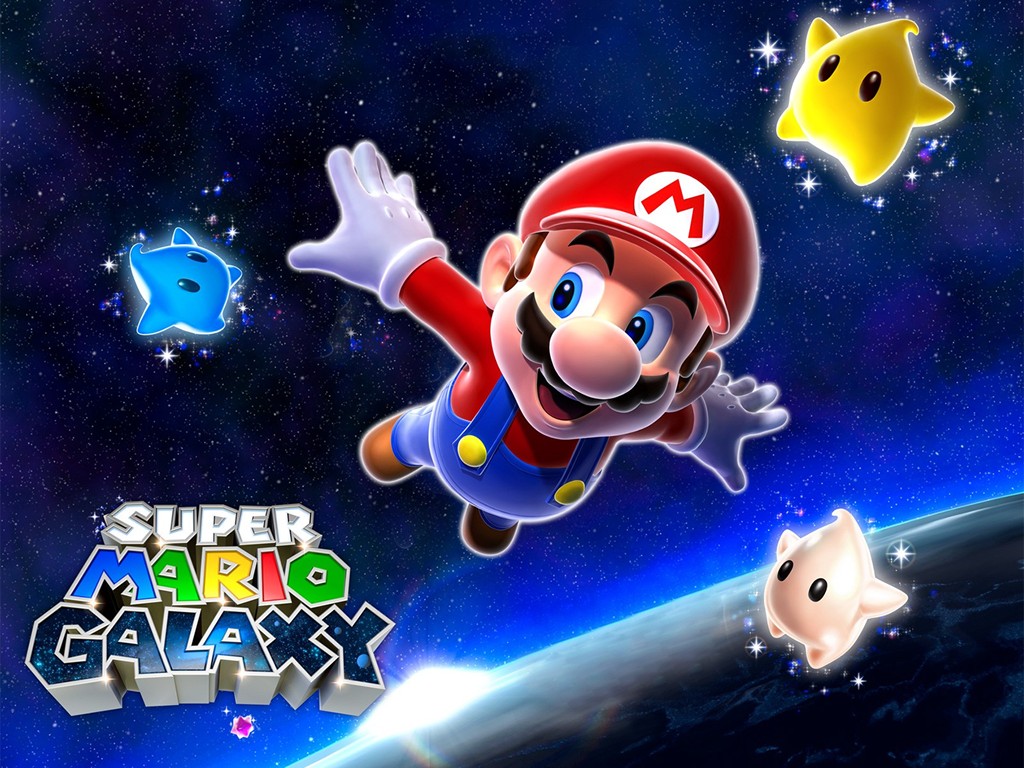
In a short university paper, entitled “It’s a-me, Density,” 4 University of Leicester physics students have explored the physics behind Nintendo’s popular interstellar platforming adventure, Super Mario Galaxy.
For those who are unfamiliar with Super Mario Galaxy, the game is comprised of a multitude of small, playable, sometimes spherical planets that Mario can visit.
The thing is that Mario can subsequently jump, walk, and do all his typical Mario stuff with essentially the same gravity that is found on Earth, albeit on much smaller planets – what the University of Leicester physics students want to explore is the scientific ramifications of that fact.
Read more details on the students’ analysis of Super Mario Galaxy‘s physics after the break.
Super Mario Galaxy‘s Physics Explained

When one peruses the data and contents of the students’ university paper, it appears that such objects are indeed possible, but in order to be valid, they would need to be ridiculously dense.
Furthermore, the authors of the paper write about what would happen to the beloved star of Super Mario Galaxy if he was on “a planet with the density of a white dwarf, a 50m radius, and Earth-like gravity.”
Naturally, it wouldn’t be a pretty sight. It appears that the inherent differences in gravity given the less-than-ideal circumstances would cause Mario’s face to “inflate and redden.” The students go on to to say, “It is possible that this is the source of Mario’s baby-like complexion.“
However, probably the most damning thing of all is that even if Mario were to “really” visit any of the small planets presented in Super Mario Galaxy, none of them would last long enough to be explored.
Why? Here’s the physics students’ answer:
“The outcome of this discrepancy is that if constructed, the planet would survive for only a very brief moment before violently destroying itself and any short plumbers who happen to be running about on its surface.”
Lovely.
You can read the University of Leicester students’ paper at this link, if you so desire.
So what are your thoughts on their analysis of Super Mario Galaxy‘s physics? Was it unnecessary since it’s obviously a video game, or would you like to see more real-life analyses of video games (for whatever reason, entertainment, education, et cetera)?
Let us know in the comments section below! As always, stay tuned to GamerHeadlines.com for the latest in video game and technology news.