
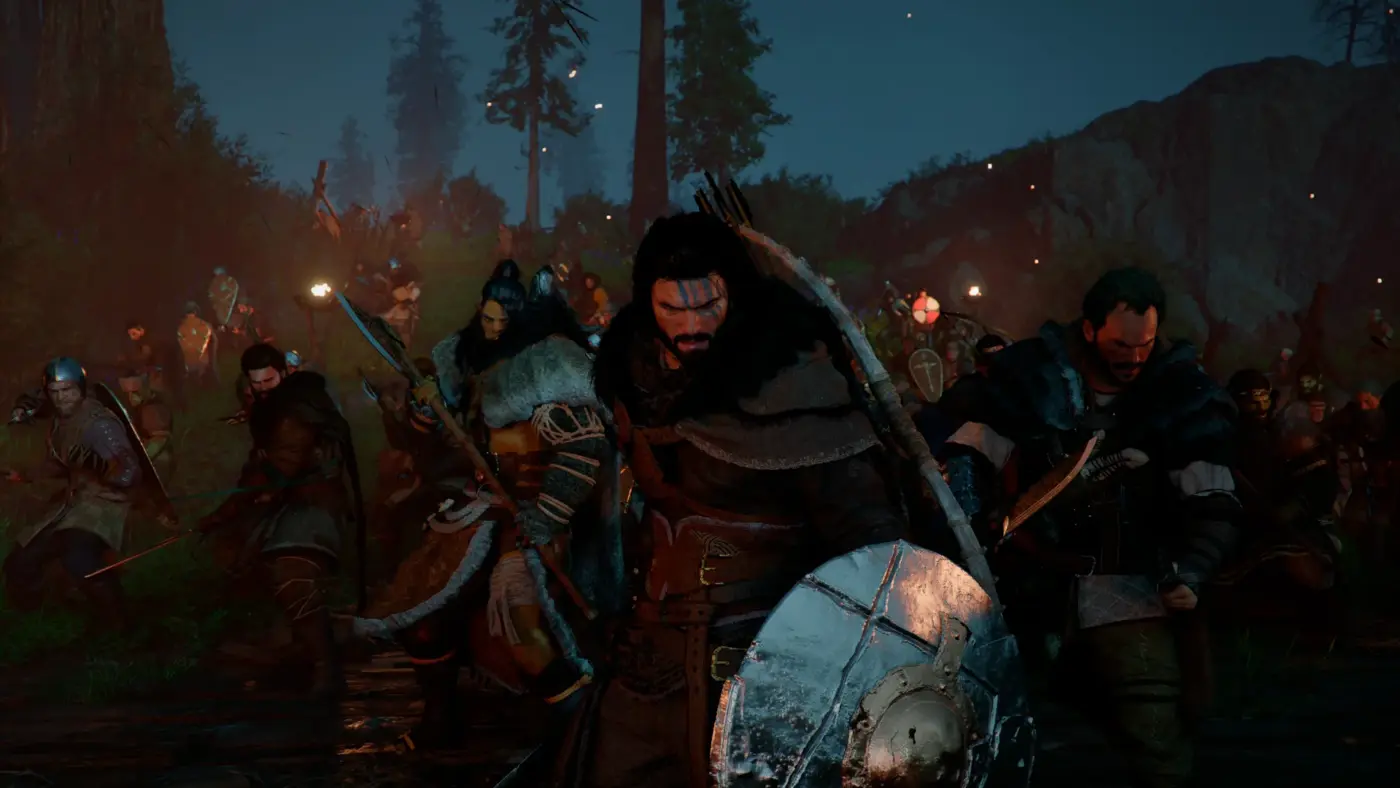
Crimson Desert is worth buying for players who enjoy exploring a complicated world, learning its systems and finding their own reasons to leave the main road. Its combat, traversal and everyday activities give Pywel an identity beyond its enormous map. The price of that freedom is a demanding learning curve and uneven pacing. Enhanced improves several concrete weaknesses, but a tightly directed story remains a poor reason to choose this game.
The strongest recommendation is for the base edition. Existing owners already receive Enhanced for free; newcomers do not need Deluxe to obtain its improvements. The separate Charting the Unknown expansion is outside this review’s verdict.
Methodology: Game features and patch details in this research-based editorial review have been checked against official sources. GamerHeadlines has not conducted a new playthrough or current cross-platform performance test. The screenshots are supplied by Pearl Abyss.
What makes Crimson Desert worth playing?
Pywel works best as a place that gives you competing reasons to change direction. Kliff’s effort to reunite the Greymanes supplies a starting purpose, while climbing, gliding, fighting and investigating ruins create the opportunities between objectives. Pearl Abyss’s official overview establishes the breadth of the setting. The question is what that breadth asks of the player.
An open world becomes convincing when learning how to move through it changes what you notice. A high ledge becomes a possible route; an unfamiliar mechanism becomes a reason to investigate an ability; preparation gives a small resource-gathering detour a purpose. Crimson Desert’s strongest design argument is that these activities can feed one another.
That appeal is not universal. Reaching somewhere unusual can be a reward in itself, but some players need a useful item, a memorable quest or a story revelation at the end. The world can be rich in possibilities and still feel unrewarding to someone who dislikes choosing their own goals.
Our recommendation rests on the first kind of enjoyment. Buy it because exploring and learning look appealing. A large map alone is an insufficient reason to expect a satisfying adventure.
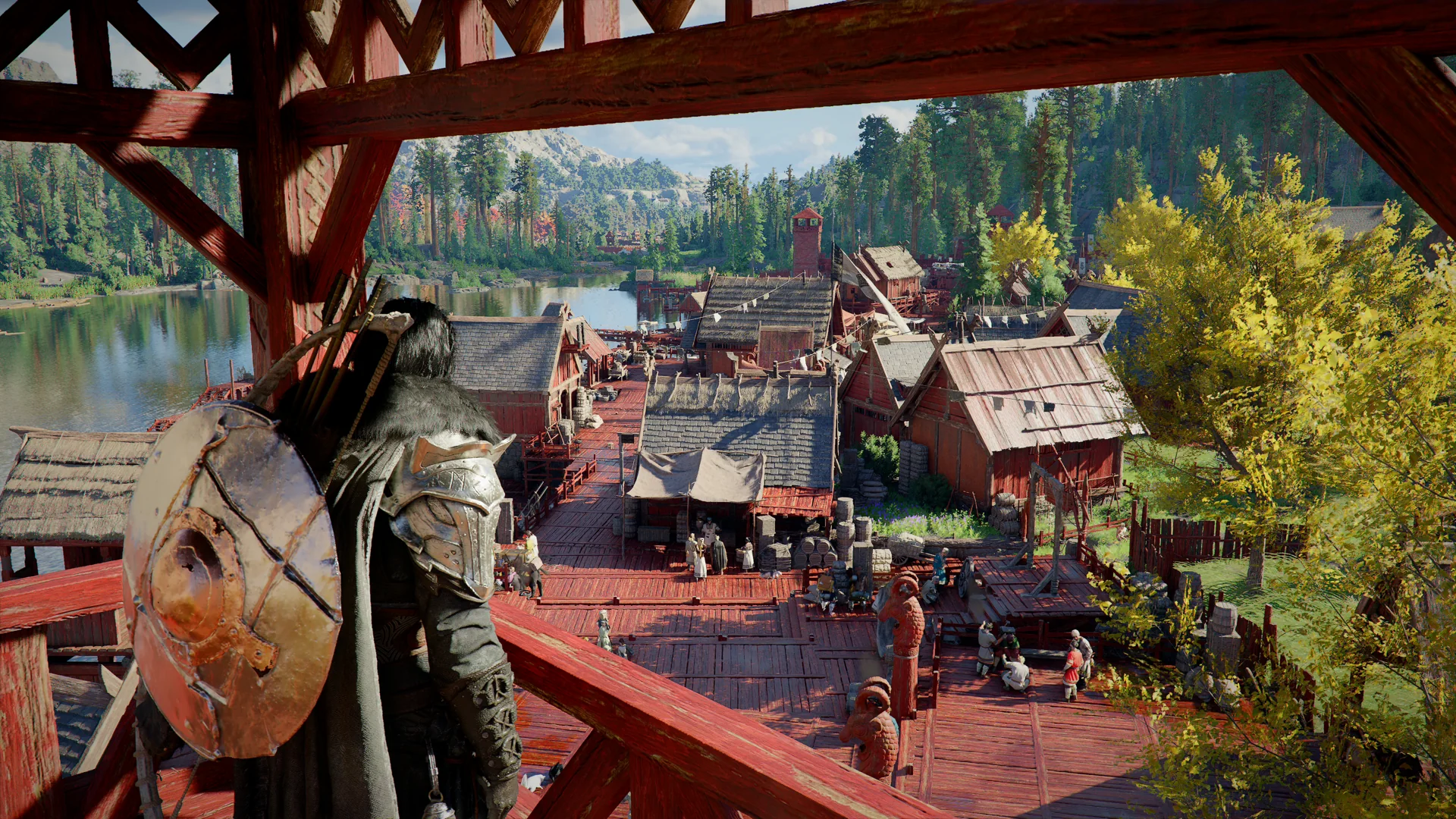
Pywel’s towns sit within the landscape you explore. Official base-game image: Pearl Abyss.
Combat gives experimentation a purpose
The combat proposition is broader than sword combos. The official game description includes weapon attacks, unarmed blows, kicks and grapples. That mix gives ordinary encounters a rough, physical character. Choosing how to open an enemy’s defense matters alongside the damage dealt afterward.
The cost is learning a vocabulary of inputs while also reading attacks and managing resources. A large move set is valuable when it creates understandable choices. When the player is still trying to remember the controls, additional options can become additional friction.
This makes Crimson Desert a conditional recommendation for action fans. Someone who enjoys practicing a complex toolkit has a stronger reason to persist than someone expecting every ability to become comfortable immediately. The documented difficulty options now make that learning process more adjustable, although they cannot establish how responsive an individual player’s setup will feel.
Enhanced fixes specific problems
The current purchase includes changes made after launch. Pearl Abyss’s 1.04.00 update introduced Easy, Normal and Hard settings, storage items, inventory categories and control presets. Easy reduces enemy pressure and widens parry and dodge windows. These changes directly affect players who want more room to learn.
The Enhanced update, version 2.00.00, subsequently added narrative material and revised skill progression. Abyss Links give the other playable characters a corresponding resource when one spends Abyss Artifacts learning skills; individual character resets are also supported. That reduces a specific source of friction in distributing progression across the cast.
| Buying concern | Documented improvement | Our assessment |
|---|---|---|
| Boss pressure makes learning unpleasant | Difficulty selection, including wider defensive windows on Easy | A meaningful accessibility improvement for the learning curve |
| Collecting resources overwhelms the inventory | Storage additions and inventory organization | More options for managing collected resources |
| Progression investment is spread across characters | Abyss Links and individual skill resets | A clearer reason to experiment with the cast |
| The narrative fails to connect its ideas | Additional scenes, dialogue and story refinements | Worth considering, but additional material does not guarantee stronger pacing |
Enhanced makes the present purchase more attractive because these are functional changes. It would still be an overreach to treat the patch list as proof that the campaign, controls and every boss now satisfy all players. Several identifiable barriers have been addressed, while the game’s dense underlying design remains the deciding factor.
The story struggles to organize the abundance
Rebuilding a scattered group of comrades is an effective emotional premise. It gives a camp, a side activity or a recovered ally a potential connection to Kliff’s larger purpose. Crimson Desert is less persuasive when the distance between that purpose and the next task becomes difficult to ignore.
A game can contain many conversations and dramatic events without giving the player a strong reason to care about the next one. Equally, a player who enjoys inhabiting the world may find meaning in activities the main plot barely acknowledges.
Enhanced’s new story material addresses this area explicitly. Narrative-focused buyers should examine the revised scenes before choosing the game for its story.
Players who need a clear narrative payoff for every extended diversion should weigh that preference more heavily than the game’s scale or feature list.
The puzzles show both the depth and the friction
In the Monolith Crown challenge, the documented solution involves manipulating a laser cube, keeping track of camera orientation and completing a separate floor-switch activation. Understanding the central object is only part of completing the task.
The Path of Trials uses a different relationship between mechanics. A power panel must be thawed, moved and fitted into the mechanism before it freezes again. Traversal, environmental rules and ability use become one problem. These examples illustrate the game’s ambitions without requiring story spoilers or a list of puzzle answers.
The appeal is learning a rule and applying it somewhere unfamiliar. The frustration is uncertainty about whether a failure comes from a wrong idea, missing progression or the execution of a correct solution. A difficult puzzle feels fairer when the game communicates that difference.
Crimson Desert therefore suits patient problem-solvers more readily than players who want constant direction. A guide can remove an occasional roadblock; needing one for every unfamiliar interaction would undermine the discovery that makes the game attractive in the first place.
The smaller activities are part of the purchase decision
Gathering, cooking, fishing and camp development help explain why two people can value the same game so differently. These systems can make preparation feel like participating in a place. They can also make progress feel dependent on errands.
Cooking has more purpose when preparing for a fight; collecting materials feels more worthwhile when an upgrade changes what you can attempt. Problems arise when the preparation consumes the time and energy a player wanted to spend on the destination.
Crimson Desert offers many ways to occupy an evening, but occupation and satisfaction are different standards. The strongest audience is happy to choose a modest objective and let the world interrupt it. Someone who wants a short, reliably productive session may find the same structure exhausting.
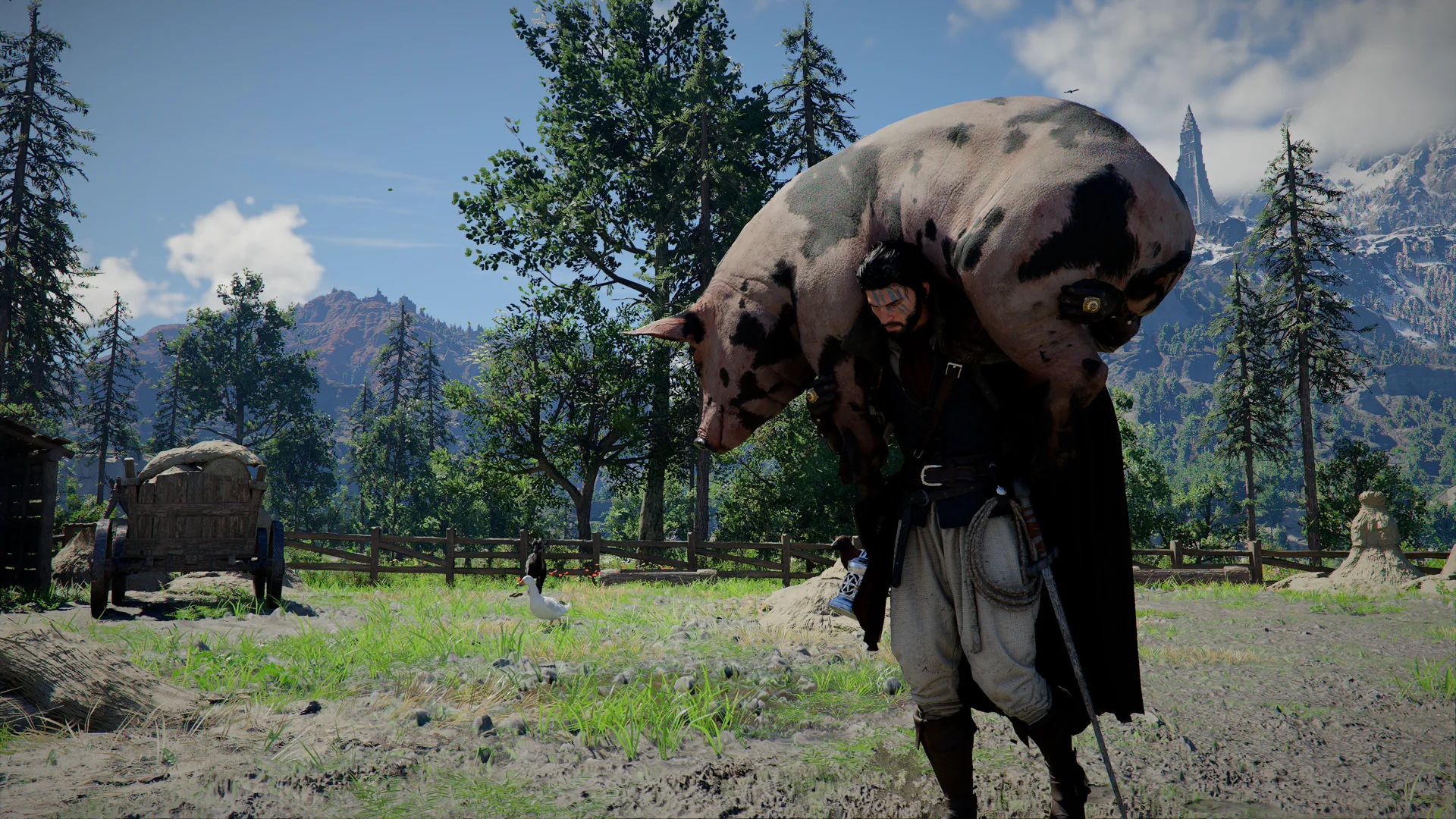
An ordinary rural task sits beside the game’s larger fantasy ambitions. Official base-game image: Pearl Abyss.
Standard, Deluxe or the expansion?
Start with Standard unless you specifically want the Deluxe equipment pack. At the October 23 US Steam check, the base edition cost $69.99 and Deluxe cost $79.99, a $10 difference. Those prices are storefront- and date-specific. The listing identifies Deluxe’s armor, shield and horse-equipment extras.
Pearl Abyss confirms that Enhanced is a free base-game update. An existing owner should update the game; buying Deluxe is not the route to those improvements.
| Option | Reason to choose it | What to keep separate |
|---|---|---|
| Standard | You want the base adventure and Enhanced improvements | No Deluxe equipment pack is needed for Enhanced |
| Deluxe | You value the listed equipment extras | The higher price is not evidence of a better version of the campaign |
| Charting the Unknown | You want the separate expansion’s content | This base-game review does not assess that expansion |
The forthcoming expansion’s ocean and underwater features should not inflate the base game’s verdict. Its official page also excludes the Mac App Store at launch, an important distinction for that particular storefront.
Platform checks before buying
There is no defensible platform-performance winner in this review. The PC Steam listing requires an SSD and 180 GB of available space. Frame-rate expectations require separate, hardware-specific evidence. Check the full requirements against your hardware and seek recent evidence for the platform you intend to use.
The official announcement list checked on October 23 showed 2.03.02 as its latest patch entry. Its rollout table still described the Mac App Store version as in progress. Platform and storefront distinctions matter even when the update carries an all-platform label.
The store also identifies the game as single-player. If co-op is the reason you are shopping, the current product does not meet that requirement.
Who should buy Crimson Desert?
Crimson Desert earns its recommendation through the relationship between movement, discovery and a broad set of tools. Enhanced strengthens that case by addressing difficulty, storage and progression problems that made the original learning curve harder to justify.
Its weaknesses remain relevant to the buying decision. The interface between player and possibility is dense, the campaign’s appeal is less convincing than the world around it, and the pace can turn preparation into the main event. More content does not resolve a mismatch between those demands and the way someone likes to play.
Choose it if learning Pywel sounds like the pleasure itself. Wait for a discount if you are curious but uncertain about the time and patience involved. Story-first players and anyone seeking co-op have clearer reasons to look elsewhere. Standard is the sensible starting point; Deluxe and the separate expansion need their own justification.
This is unofficial content containing Pearl Abyss copyrighted material and IP. It is not created or endorsed by Pearl Abyss.


