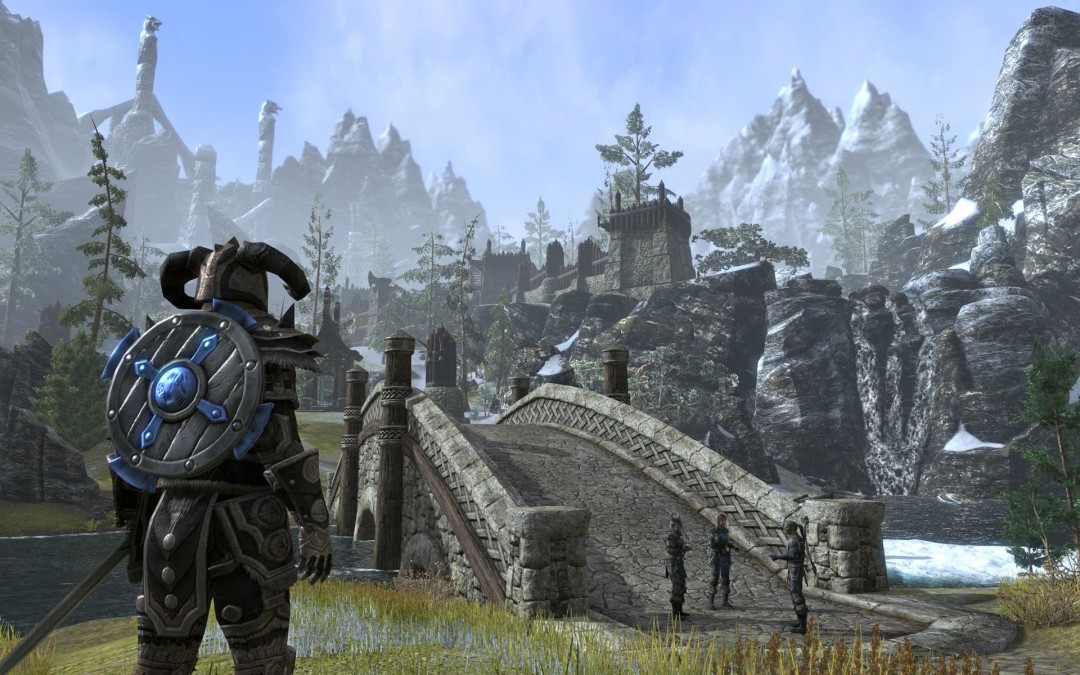
The recent beta of The Elder Scrolls Online offered a select group of players the chance to cast a critical eye over the game, prior to its April 4 release. The MMO represents the first foray of The Elder Scrolls into the online multiplayer sphere. It is arguably a risky move for a series that has always been based around large, open world, single-player experiences.
Developer ZeniMax Online Studios has attempted to combine the sense of exploration and sprawling narrative structure of the single-player games with the competitive enjoyment that comes from battling other players in PvP. But just ask BioWare about how difficult it is to achieve the best of both single- and multi-player worlds. Star Wars: The Old Republic was by no means a terrible game, but it was not the KOTOR 3 that fans of the series had been looking for. Unfortunately, The Elder Scrolls Online is likely to underwhelm and disappoint much of its own hardcore fans in the same way.
The game features nine playable races, split between three “alliance” factions. To play as the tenth race, the Imperials, players will have to purchase the special “Imperial Edition”. In a familiar series trope, each race possesses their own particular skills. High Elves, for example, have an affinity for magic, allowing them to increase damage with destructive spells.
It is possible to spend what feels like hours in the character creation screen, tweaking nose length and honing ear size in search of intangible beauty (or ugliness). The customization options are extensive: you can even alter what are euphemistically termed “posterior dimensions”. I chose an Orc, making him as hulking and muscular as possible, to visually accentuate his natural proclivity for tanking. After giving him clubs for hands and veritable rowing oars for feet, I selected the Dragonknight class, a familiar warrior role. There are three other classes that also follow the RPG archetypes: mage, rogue and healer. Returning to this traditional class structure feels disappointingly conventional when compared with the complete player freedom that was afforded by Skyrim’s classless skill progression system. Player agency is much more restricted here, in terms of both development of abilities and world exploration, due to the constraints of the MMO genre.
The game features a stellar voice acting cast, with the mysterious Prophet given the distinguished Shakespearean tones of Michael Gambon, who will be familiar to most from his role as Albus Dumbledore in the Harry Potter films. John Cleese is perfectly cast as mad-as-a-hatter Cadwell, who sports a pot hanging lopsidedly from his head. Cleese clearly revels in his character’s deliciously absurd lines.
The minimalistic UI is identical to that found in Skyrim, making a welcome change from the usual smorgasbord of buttons for spells and other items that often clutter the screen in many MMOs. The first person perspective is also uncommon to the genre, and will certainly differentiate The Elder Scrolls Online from the competition. The controls are simple and intuitive and will be instantly familiar to anyone who has experienced the series before.
Combat has arguably never been the most thrilling in The Elder Scrolls, but here it feels particularly sluggish and repetitive, especially during melee attacks. Swords swing aimlessly through the air in search of an enemy target, and weapon blows too often seem to lack weight.
It remains to be seen if The Elder Scrolls Online can capture the joy of exploration and the sense of vast scale that players experienced in the world of Skyrim. On first impression though, the game feels more like a generic MMO with an Elder Scrolls skin pasted on top. Fans of the series might be tempted to give this one a miss, and instead wait for a true successor to the 2011 Game of the Year.