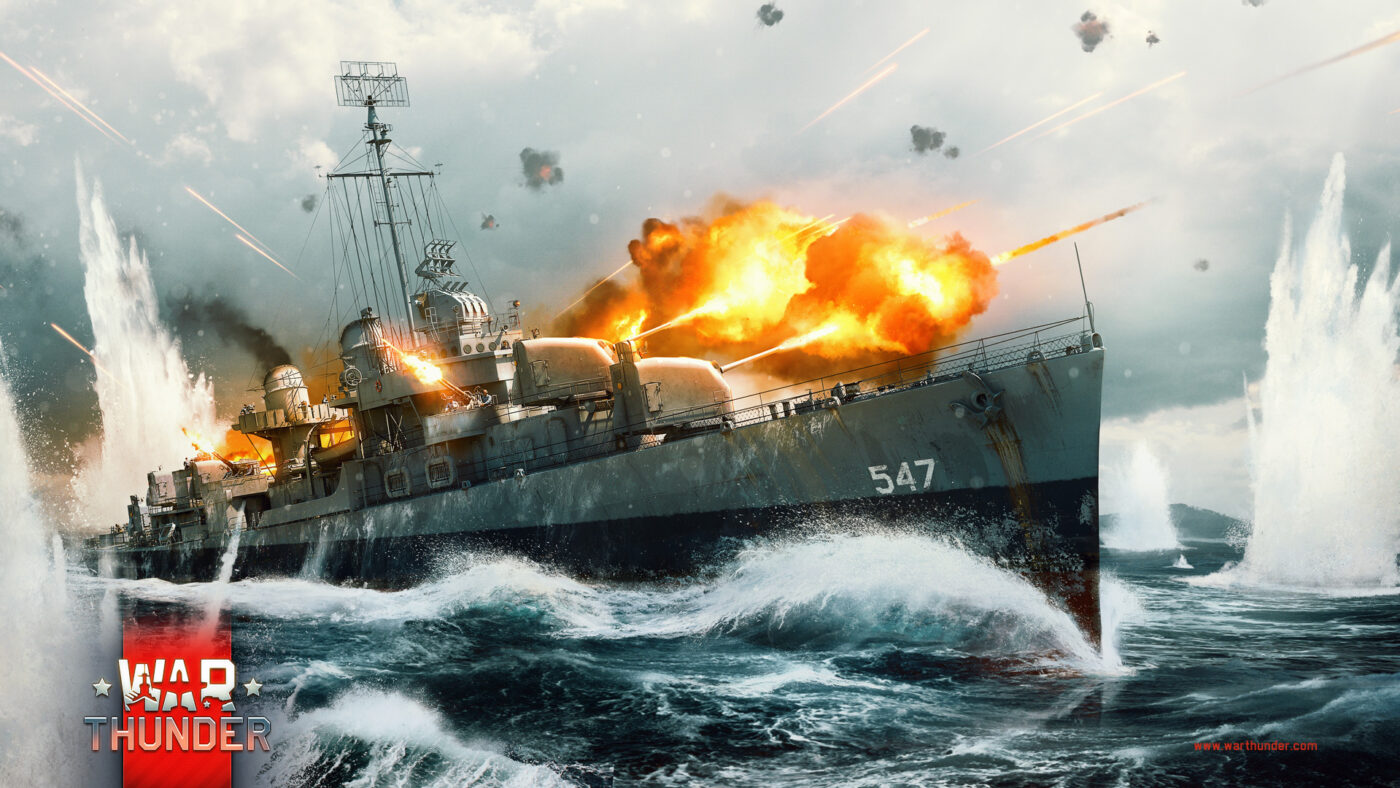
Gaijin Entertainment opened submarine testing in War Thunder on November 26, 2026, with a window running through November 30 at 11:00 GMT. The test appears under Events and Tournaments in the Submarine Testing tab. Announced in Gaijin Entertainment’s official announcement, the event places the German Type XXI and the U.S. Navy Tang-class under player command for the first time. Gaijin is treating this as a preliminary test of submarines and related mechanics, and the team is asking for feedback and bug reports through its dedicated service.
The event follows the rules for random naval battles in both Arcade and Realistic modes, but adds an underwater layer that surface-only battles never had to solve. Passive hydrophones, active sonar, a visible noise propagation zone, and a thermocline at 40 meters all combine to create a stealth and detection loop.
The Two Submarines and Their Support
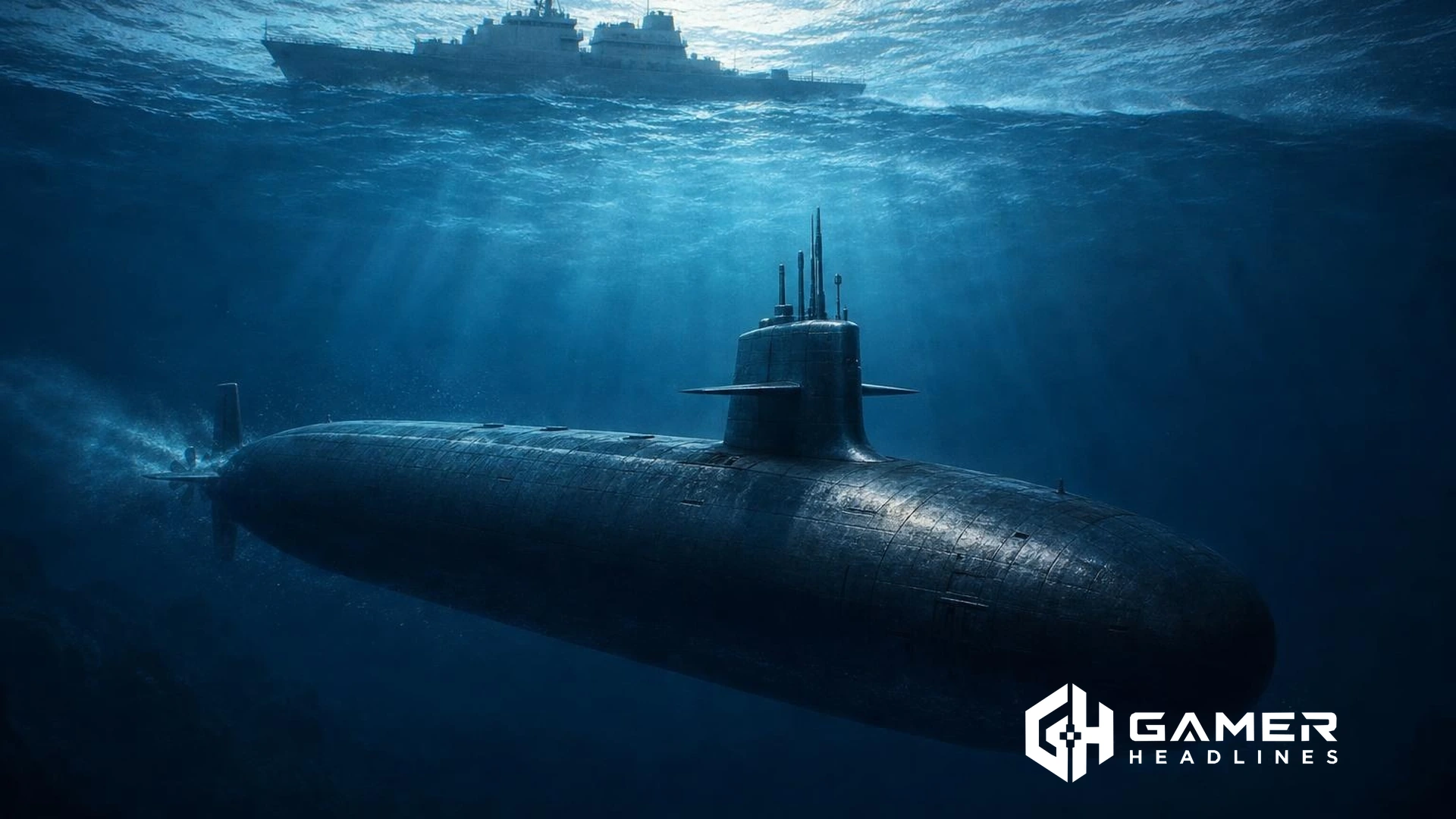
The U.S. side fields the Tang-class diesel-electric submarine. Gaijin describes it as a transitional link between World War II submarines and modern underwater combat vessels. The Tang is fast and maneuverable, and its armament consists exclusively of torpedoes. Six torpedo tubes sit in the bow and two more sit in the stern, giving the boat a total of 26 torpedoes. Without a deck gun, the Tang cannot duel surface ships directly. Its effectiveness depends entirely on getting into a position where a torpedo solution is possible.
The Tang operates alongside the cruiser USS Raleigh, the destroyer USS Fletcher, the frigate USS Dealey, and PT-103 motor torpedo boats. Air support comes from PBY-5A Catalina seaplanes equipped with new depth charges and F6F-5 Hellcat fighters. The Catalina is the more significant anti-submarine asset because the new depth charges allow aircraft to attack submarines below the surface.
Germany fields the Type XXI submarine. Produced during World War II, the Type XXI influenced global submarine shipbuilding for decades. Each boat carries 23 torpedoes in six bow torpedo tubes, with 20 mm anti-aircraft autocannons mounted in turrets as additional armament. The German surface fleet consists of the cruiser Emden, the destroyer Z43, the minelayer Drache, and S-38b-class motor torpedo boats. Bf 109 F-2 fighters and He 111 H-16 bombers, equipped with new depth charges, provide the air support.
The Tang has 26 torpedoes across six bow tubes and two stern tubes. The Type XXI carries 23 torpedoes in six bow tubes and adds 20 mm anti-aircraft autocannons in turrets. Those differences create different handling, but both rely on acoustic cover and a calculated torpedo solution rather than direct surface gunnery.
The test fits War Thunder’s wider naval expansion. The game has already moved beyond bluewater fleets into smaller vessels and coastal event lineups such as War Thunder’s Coastal Defender event. Submarines push that pattern further by adding a full underwater axis. A surface ship can no longer treat the map as a flat plane where all threats are visible on the horizon.
The Hydroacoustic Detection Layer
The new acoustic systems are divided into passive detection and active detection. Passive systems listen for sound. Active sonar sends out a signal and reads what reflects back. In this event, submarines and certain ships carry underwater acoustic detection systems that can do both or one, depending on the vessel.
All ships produce noise while moving. Engines, propeller cavitation, and even friction against the water create sound that hydrophones can pick up. Torpedo launches are louder and more noticeable than normal movement. A ship can lower its noise level by reducing speed, which makes the engines run more quietly and decreases cavitation from the propellers. For a submarine, reducing speed is survival.
Each submarine has a noise propagation zone visible on the map. That zone represents the area where an average acoustic detection system could currently pick up the submarine. At full speed, the zone grows. At low speed, it shrinks. The zone gives submarine players a direct read on their own detectability. Staying quiet means moving less and taking longer to get into position, but staying fast can turn the submarine into an easy target.
The hydrophone sequence is simple enough to become muscle memory.
- Open the hydrophone sonar interface and point toward a detected noise source.
- Press and hold the fire button, left mouse or right trigger on a controller.
- Adjust the gain until the signal display above the gain knob distorts and turns green.
- Release the button so the crew can calculate the lead angle, then fire on the solution.
If the torpedo sight solution is enabled on the action panel, the player does not need to point the bow precisely at the target because the torpedo automatically adjusts its course within a specific sector. Both submarines, the cruiser Emden, and the destroyer Z43 carry hydrophones, so passive listening is not limited to submarines.
Active sonar works as a search pulse. Pressing the fire button emits a signal within the current field of view. When the signal reflects off an object, it reveals the target and highlights it with red and yellow dots. Sonar primarily identifies the sector where a nearby submarine is located, but an exact position requires transmitting a signal. The tradeoff is immediate. A sonar signal is easily detected by hydrophones, so pinging too often reveals your own location and intentions to any submarine in the area. Cruisers, destroyers, the frigate USS Dealey, and the sub-chaser Drache carry sonar.
Naval stealth becomes a risk-management puzzle. A quiet submarine is hard to hear but slow to reposition. Push to full speed and the noise propagation zone expands around the boat. An escort that pings sonar can force a submarine to react, but that same ping broadcasts the escort’s position to any hydrophones listening nearby. The acoustic layer rewards players who listen first and transmit second.
The Thermocline and the Torpedo Ceiling
Sound does not pass through the thermocline. In this event, the thermocline sits at a depth of 40 meters. Submarines below that layer cannot be detected by passive acoustic sensors or active sonar. That makes deep water the strongest acoustic hiding spot in the event, but it is not a full observation post. A submarine below the thermocline also cannot hear what is happening above it, so it loses track of surface contacts while it stays down.
The bigger limit is the torpedo launch depth. Torpedoes can only be launched at depths of 20 meters or less. A submarine below 40 meters is completely unable to attack. To fire, it has to rise through the thermocline, re-enter the acoustic environment, and then get to 20 meters or shallower. Gaijin notes there is little point in remaining at great depths for an extended period.
That creates a three-layer decision space. Below 40 meters is a safe acoustic hiding spot but also deaf; detection becomes possible again between 20 and 40 meters, and firing is limited to 20 meters or less. The run from the thermocline to the launch window is the moment when the boat is most exposed.
What Submarines Change for Naval Matches
Adding a torpedo-only stealth class changes the surface meta by creating an attacker that does not need line of sight. The Tang is the clearest example because it has no guns at all. Its 26 torpedoes are split across six bow tubes and two stern tubes, so it must rely on acoustic detection and a calculated fire solution. The Type XXI carries 23 torpedoes in six bow tubes and adds 20 mm anti-aircraft guns, but its anti-ship role is still underwater. Surface vessels now have to treat quiet water as a potential threat corridor.
The counterplay is built into the event’s escorts and aircraft. Sonar-equipped ships such as the frigate USS Dealey and the sub-chaser Drache can actively search for submarines, while hydrophone-equipped cruisers and destroyers can listen. The PBY-5A Catalina and He 111 H-16 carry new depth charges, which give aircraft a direct attack against submarines that remain shallow enough to be reached. Fighters such as the F6F-5 Hellcat and Bf 109 F-2 provide air cover, but the depth-charge platforms are the ones that punish submarines for staying too close to the surface.
This forms a naval triangle. Submarines hunt surface ships, sonar escorts hunt submarines, and depth-charge aircraft force submarines to choose between staying shallow to attack or diving below the thermocline to escape. A submarine that dives below 40 meters cannot hear the surface and cannot fire until it returns above 20 meters. A surface fleet that ignores its acoustic sources can lose ships to torpedoes fired from a solution the target never saw.
Event Format, Maps, and the Testing Focus
The event follows standard random naval battle rules in Arcade and Realistic modes. Matches take place on four maps with refined seabed terrain: African Gulf, Palau islands, North port, and Japanese port. All players can participate regardless of platform. That broad access makes the test a large-scale mechanics trial.
Refined seabed terrain changes how submarines move on each map. Underwater obstacles, depth changes, and the 40-meter thermocline create different approach routes on each map. A quiet submarine can use shallow water to stay near a firing window, but that same shallow water leaves it vulnerable to sonar and depth charges. Deep water protects the submarine but removes its ability to hear or attack.
Gaijin’s language is careful. This is a preliminary test of submarines and related mechanics. The studio welcomes feedback and asks players to report bugs through its dedicated service. That framing suggests the event will be used to tune the acoustic systems, the depth rules, and the balance before submarines move further into the game. Coming after additions such as the Eagle’s Shadow update, the test fits War Thunder’s 2026 pattern of rolling out complex features in a limited, playable form first.
For players entering the test, the most practical start is to listen before pinging. Lower speed to shrink the noise propagation zone, use hydrophones to build a solution, and save active sonar for moments when the target sector is already known. The thermocline only offers escape; firing requires a depth of 20 meters or less. Every successful torpedo run has to end above 20 meters.