

The R6 Marketplace is Ubisoft’s official trading platform for Rainbow Six Siege, where eligible cosmetic items are bought and sold with R6 Credits. It entered beta with Operation Deep Freeze in November 2023 and reached full release during Operation New Blood in June 2024. Ubisoft closed the Marketplace after the December 27, 2025 security incident. In a June 30, 2026 update, Ubisoft said it would remain closed while the company rebuilt key parts of the game’s economy; no reopening date was announced. This guide separates that current status from the Marketplace’s launch history and explains its trading rules.
Quick Verdict
Current status: as of October 16, 2026, the R6 Marketplace remains closed. Ubisoft’s June 30 statement is the latest official status located for this update and gives no return date. When the service is available, it uses R6 Credits, automated order matching and a 10% seller fee. Treat reopening dates from trackers or community posts as unconfirmed unless Ubisoft publishes them.
What Is the R6 Marketplace?
The R6 Marketplace is Rainbow Six Siege’s version of the Steam Community Market, but it is walled off from real money. It is fully operated by Ubisoft, governed by official pricing rules, eligibility lists, and transaction fees. Every trade runs through Ubisoft’s system and executes automatically when buyer and seller orders match. Credits cannot be cashed out for fiat currency. Credits earned from a sale stay locked inside your Ubisoft Connect wallet, where they can be spent on store items, battle passes, or further marketplace bids.
Ubisoft introduced Marketplace trading in beta during Operation Deep Freeze in November 2023. The official season history places the full release in Operation New Blood in June 2024. Siege X arrived on June 10, 2025, but it was not the Marketplace launch.
If you’re playing on current-gen hardware, our Rainbow Six Siege PS4 vs PS5 breakdown is worth reading alongside this guide, since platform matters for how you access the Marketplace browser interface.
Is the R6 Marketplace Down Right Now? (October 2026 Status)
Yes. Trading is currently unavailable. Ubisoft’s June 30 update said the company was rebalancing the economy and rebuilding key foundations before Marketplace could return. Ubisoft did not publish a reopening date.
An earlier January 30, 2026 Player Protection update said the work was expected to take several months. Ubisoft’s June 30 follow-up superseded that estimate and said Marketplace would remain closed. The official roadmap does not give a relaunch date.
What Happened in December 2025: The Breach Explained
On December 27, 2025, Ubisoft took Rainbow Six Siege offline after what it later described as a breach affecting the game’s economy. The incident prompted recovery work and a wider security review.
In its January 30 Player Protection update, Ubisoft said it had restored player inventories and strengthened protections. Ubisoft did not publish a technical exploit method, so third-party explanations should not be treated as confirmed.
Ubisoft said the breach did not compromise personal data or the game’s source code. It also announced app-based two-factor authentication for Marketplace access and said the trading service would remain unavailable while security and economic systems were rebuilt.
When Is the R6 Marketplace Coming Back?
Ubisoft has not set a return date. Any specific season or launch window should be treated as unconfirmed until it appears in an official Ubisoft announcement.
For a future reopening, rely on Ubisoft’s news feed and the official Rainbow Six account.
Watch the official Rainbow Six Siege news page and the @Rainbow6Game account on X. Those are the first places any reopening announcement will land.
How the R6 Marketplace Works
The R6 Marketplace uses an order-book matching system similar to a stock exchange. Buyers post the maximum price they will pay, sellers post the minimum they will accept, and Ubisoft’s engine automatically matches the lowest available ask against the highest available bid. When prices cross, the trade executes instantly.
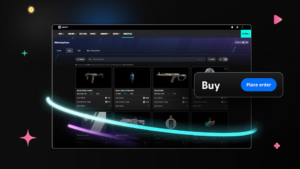
How to Buy Items on the R6 Marketplace
Ubisoft’s official buying guide covers the full process. The steps are listed below.
- Open the Buy tab on the Marketplace homepage and browse by category or search for a specific cosmetic.
- Review the item page; last sold price, current asks, and current bids are all visible.
- Enter the maximum R6 Credits you are willing to pay and submit a purchase order.
- The system finds the lowest matching seller. The trade completes at the seller’s price, not your ceiling; so you can never overpay against your own order.
- The item appears in your in-game inventory within minutes, and your credits are deducted.
Active purchase orders are capped at five at a time and expire automatically after 30 days. You can cancel or adjust an unfilled order at any time.
How to Sell Items on the R6 Marketplace
For the full walkthrough, Ubisoft’s official selling guide has the step-by-step.
- Open the Sell tab. Only eligible tradable items appear here.
- Pick an item, review the order book for fair market value, and enter your minimum acceptable price.
- The item is removed from your inventory and held in escrow while pending.
- When a buyer’s bid meets your ask, the sale completes automatically. Credits hit your wallet immediately.
Like buy orders, you may hold up to five active sale orders, each lasting 30 days. Ubisoft retains a flat 10% fee on every completed sale; sell a skin for 1,000 R6 Credits and you receive 900.
The 10% Transaction Fee
The fee applies only to sellers. Buyers pay exactly the listed ask price with no additional charges. There is no withdrawal fee because credits remain inside the Ubisoft ecosystem permanently. Bake the 10% into every target sale price, or you risk selling at a net loss.
R6 Marketplace Eligibility Requirements
To trade, your account must meet all of the following; a full breakdown lives on Ubisoft’s official Marketplace info page:
- Clearance Level 25 in Rainbow Six Siege.
- App-based Two-Factor Authentication (2FA) active on your Ubisoft Connect account. Since the January 2026 Player Protection update, Ubisoft has signalled this will be mandatory at app level; SMS/email 2FA alone may not suffice at relaunch. Set it up now at account.ubisoft.com/security-settings.
- A verified recovery email and a Ubisoft account in good standing.
- No active bans or chargeback marks on the account.
If you see “You do not currently meet the requirements,” play one match to refresh your profile and confirm that 2FA and email verification are active.
Where to Access the R6 Marketplace
The former public Marketplace URL currently returns 404 while the service is closed. Check Ubisoft’s latest Marketplace status update and the official Siege news feed for a replacement URL or reopening notice.
R6 Credits: The Only Currency
Marketplace trades use R6 Credits. Credits from sales stay in the Ubisoft ecosystem and cannot be cashed out. Pack sizes and prices can change, so check Ubisoft’s current store before buying credits.
What You Can and Cannot Trade
Eligible categories include weapon skins (universal and operator-specific), operator uniforms and headgear, charms, attachment skins, drone skins, and operator card portraits. Items become tradable on a delayed schedule; current-season cosmetics are locked and only become tradable when the following season launches.
Items typically NOT tradable:
- Anything from the current active season.
- Certain DLC-exclusive bundles, including some Elite sets and crossover collaborations.
- Battle Pass items currently in their active season.
- Achievement and progression unlocks.
- Promotional or Twitch Drop items during their exclusivity window.
If an item you own does not appear in your Sell tab, it is not eligible at this time. Ubisoft has steadily expanded the eligibility list since launch.
There is also a 15-day re-sell cooldown after buying any item; you cannot flip it immediately. And the daily completed-order cap is 20 buys and 20 sells per rolling 24-hour window.
How Marketplace Prices Work
Players set buy and sell orders within Ubisoft’s allowed price range. Because the service remains closed, old tracker charts and pre-closure examples are historical and should not be treated as current quotes.
R6 Marketplace Pros and Cons
Pros:
- Officially supported and secure; no third-party scam risk when operational.
- Access to retired cosmetics like Black Ice and Glacier unavailable elsewhere.
- Automated order matching removes haggling and waiting rooms.
- You always pay the seller’s asking price, never your maximum bid.
- Cross-platform inventory sync through Ubisoft Connect (PC, PlayStation, Xbox).
- Reasonable 10% seller fee.
Cons:
- No fiat cash-out; credits and skins are locked inside Ubisoft’s ecosystem.
- Current-season items are non-tradable.
- Some Elite bundles and crossover skins are permanently excluded.
- No native console UI.
- High eligibility wall (Clearance Level 25, 2FA, season activity).
- Total dependence on Ubisoft uptime; the December 2025 breach proved how quickly trading can be paused.
- Offline since December 27, 2025.
Tips for Trading Smarter When It Reopens
1. Use the active order book. The “last sold” figure is a single data point. The active bid/ask spread shows where the market sits right now.
2. Avoid current-season items. They cannot be traded until the next season releases. List them at season rollover for best demand.
3. Factor the 10% fee into every sale. A skin bought for 200 credits and sold for 200 credits is a net loss of 20 credits.
4. Enable app-based 2FA before relaunch. It will be mandatory. Set it up at account.ubisoft.com/security-settings today and avoid the first-day rush.
5. Treat skins as purchases for personal use. R6 Credits and cosmetics have no realizable real-money value outside Ubisoft’s ecosystem. The December rollback showed that hoarding a large credit balance carries risk.
6. Stick to Ubisoft’s official service. Third-party “R6 trading” sites, account-share services and Discord traders are not Ubisoft’s Marketplace. While the service is closed, use the official Siege news feed to identify any future trading URL.
R6 Marketplace vs Third-Party Trading Sites
| Feature | Official R6 Marketplace | Third-Party Sites |
|---|---|---|
| Operator | Ubisoft (first-party) | Independent, unendorsed |
| What’s traded | Cosmetics only | Whole accounts or “escrow” workarounds |
| Currency | R6 Credits (no cash-out) | Real money / crypto |
| Ubisoft TOS compliant | Yes | No; account selling violates TOS |
| Scam risk | Negligible | Real and documented |
| Seller fee | 10% (flat) | Variable |
| Status (October 16, 2026) | Offline | Live |
Ubisoft does not permit cross-account item transfers. Sites claiming to broker individual skin trades may instead offer whole accounts, which can violate Ubisoft’s terms. Use only a trading route that Ubisoft identifies as official.
What to Do While the R6 Marketplace Is Offline
To prepare for a possible return:
- Build inventory. Keep earning seasonal items, Battle Pass cosmetics, and Alpha Pack drops. Nothing disappears during downtime.
- Hit Clearance Level 25 and turn on app-based 2FA now so you are ready on day one.
- Don’t buy R6 Credits speculatively purely for flipping until a firm return date is confirmed.
- Follow official channels. The Rainbow Six Siege news hub and @Rainbow6Game on X are where announcements will appear first.
R6 Marketplace FAQ
Is the R6 Marketplace safe?
Yes; when operational. Every trade is processed by Ubisoft’s infrastructure with no peer-to-peer interaction required. The December 2025 breach targeted Ubisoft’s backend systems.
Can I sell skins for real money?
No. All transactions use R6 Credits, which cannot be cashed out.
What is the R6 Marketplace fee?
A flat 10% on every completed sale, paid by the seller. Buyers pay no additional fee.
Why can’t I see some of my skins in the Sell tab?
The item is either from the current season (locked until next season) or on Ubisoft’s non-tradable list (certain Elite bundles, crossover skins, achievement rewards).
Can console players use the R6 Marketplace?
Yes, via a web browser logged into Ubisoft Connect. No native PlayStation or Xbox UI exists, but inventories sync automatically.
When will the R6 Marketplace come back online?
No date has been set.
Will I lose my skins and credits while it’s offline?
No. All cosmetics and credits remain tied to your account.
Is there an R6 Marketplace mobile app?
No dedicated app exists. The site is fully responsive on mobile browsers.
How much is Black Ice on the R6 Marketplace?
Pre-shutdown averages ranged from under 100 credits for less popular weapons to around 2,000 credits for Ash’s R4-C Black Ice. Prices will be volatile on relaunch.
What’s the difference between the R6 Marketplace and the in-game store?
The in-game store sells new and current content at Ubisoft’s fixed prices. The R6 Marketplace lets players trade past-season items at prices set by supply and demand.


